
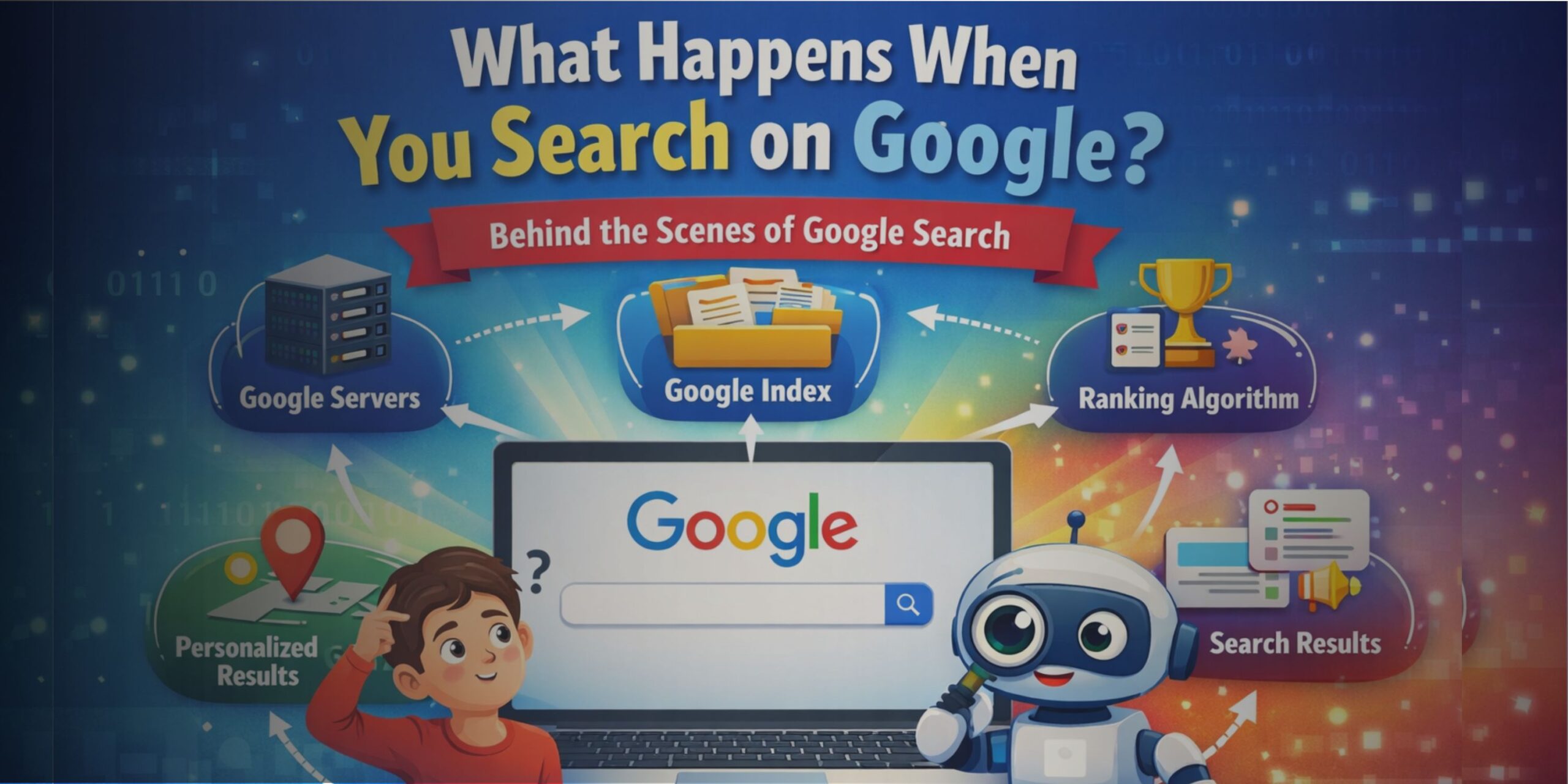
Have you ever wondered what actually happens when you type something into Google and hit “search”?
It feels instant — you type a query, press enter, and within seconds, millions of results appear. But behind that simple action, there’s a powerful and complex process working in real time.
Let’s break it down in the simplest way possible 👇
Step 1: Your Query Travels to Google’s Servers
The moment you hit “search,” your request is sent from your device to Google’s servers.
Google has data centers all over the world, so your query is directed to the nearest and fastest server. This is why results load almost instantly.
Step 2: Google Checks Its Index (Not the Internet!)
Here’s something surprising:
👉 Google does NOT search the entire internet every time you search.
Instead, it looks into something called an index — a massive database where Google has already stored information about billions of web pages.
Think of it like:
📖 A library catalog instead of searching every book one by one.
Step 3: How Did Google Get That Data?
Before your search even happens, Google uses bots (called crawlers or spiders) to scan websites across the internet.
These bots:
- Visit web pages
- Read content
- Follow links
- Store information in Google’s index
This process is called crawling and indexing.
Step 4: Google Ranks the Results
Now comes the most important part 👇
Once Google finds relevant pages, it ranks them using its algorithm.
Google considers hundreds of factors, such as:
- Relevance to your search
- Quality of content
- Website authority
- Page speed
- Mobile friendliness
- User experience
This is why some websites appear on the first page, while others don’t.
Step 5: Results Are Personalized (Sometimes)
Google may also adjust results based on:
- Your location
- Search history
- Device (mobile/desktop)
For example:
Searching “best cafe” in Delhi vs Mumbai will show different results.
Step 6: Results Appear in Seconds
Finally, Google shows you:
- Organic results (SEO-based)
- Ads (paid results)
- Featured snippets
- Images, videos, maps
All of this happens in less than a second 🤯
Why This Matters for You
Understanding this process helps you realize:
- Why some websites rank higher
- Why SEO is important
- Why quality content matters
- Why your website may or may not appear on Google
Final Thoughts
The next time you search something on Google, remember:
👉 You’re not searching the internet
👉 You’re searching Google’s organized system of the internet
And the better your content is optimized, the higher your chances of being found.
Bonus Thought
If you’re curious about how websites actually rank and how this whole system works in practice, learning the basics of SEO and digital marketing can give you a big advantage in today’s online world.