
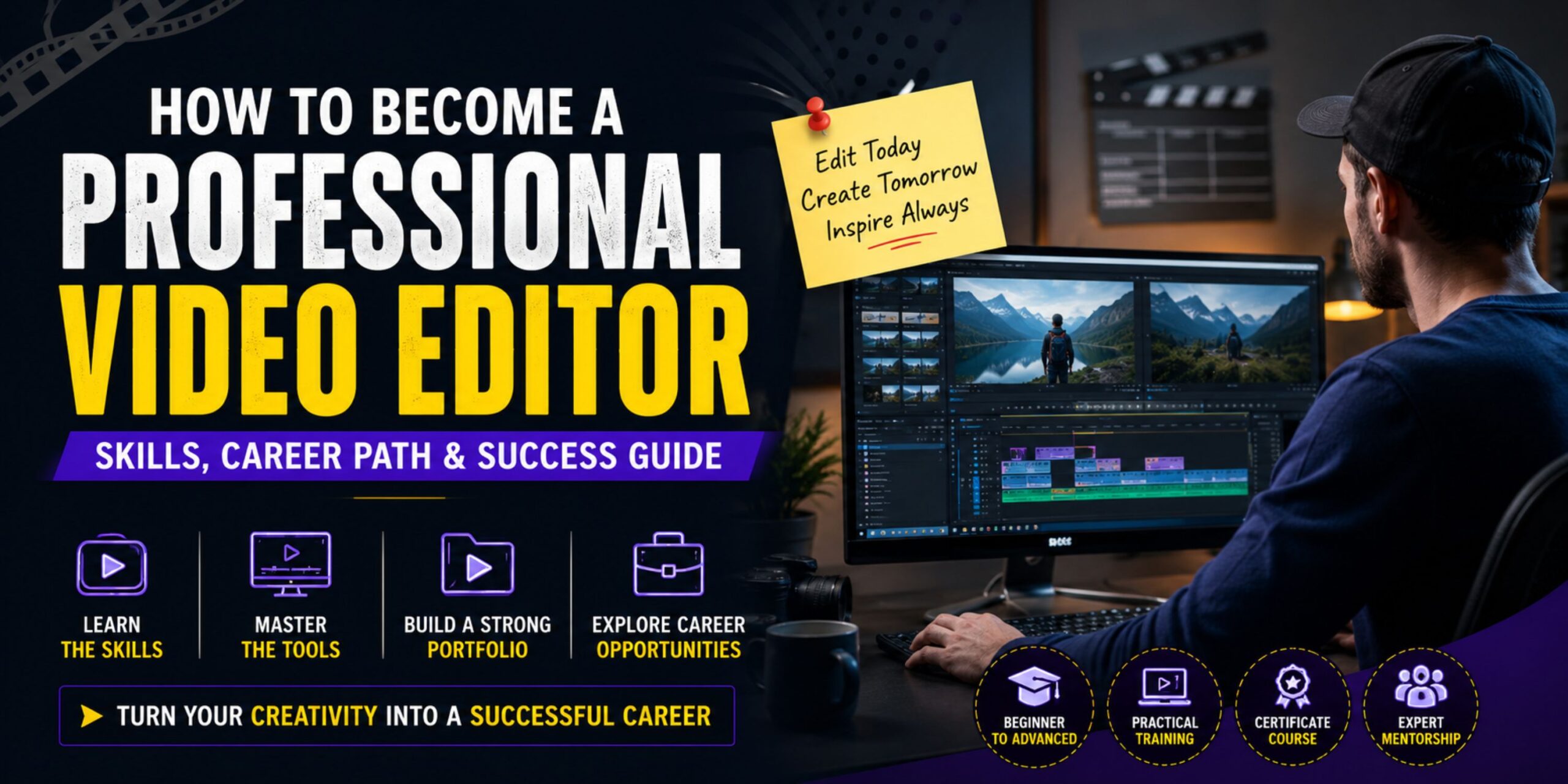
Video content is everywhere—from YouTube and Instagram Reels to corporate advertisements, online courses, films, and OTT platforms. Behind every engaging video is a skilled video editor who transforms raw footage into compelling stories.
As businesses and creators continue to invest in video marketing, the demand for professional video editors is growing rapidly. Whether you want to work for a company, become a freelancer, or start your own editing business, video editing offers exciting career opportunities with excellent earning potential.
In this guide, you’ll learn everything you need to know about becoming a professional video editor, including the skills you need, the software to learn, career options, salary expectations, and practical tips to succeed.
What Does a Professional Video Editor Do?
A professional video editor is responsible for turning raw video clips into polished, engaging content. Their work involves much more than simply cutting and joining videos.
A video editor typically:
- Organizes and manages raw footage
- Cuts and trims unnecessary scenes
- Adds transitions and visual effects
- Enhances colors through color correction and grading
- Synchronizes audio and video
- Removes background noise
- Adds subtitles, captions, and graphics
- Creates motion graphics and animations
- Exports videos in different formats for various platforms
Professional editors work on:
- YouTube videos
- Social media content
- Corporate videos
- Advertisements
- Wedding films
- Documentaries
- Music videos
- Educational content
- Movies and television shows
Why Choose Video Editing as a Career?
The digital world is creating endless opportunities for skilled video editors. Every business wants high-quality videos to promote products, educate customers, and build their brand online.
Here are some reasons why video editing is one of the best creative careers today.
High Demand
Companies, influencers, educational institutions, startups, and digital agencies constantly need professional editors.
Excellent Freelancing Opportunities
Many editors work independently and earn by serving clients worldwide.
Flexible Work Environment
Video editing is one of the few careers where you can work:
- From home
- In an office
- As a freelancer
- While traveling
Attractive Income
Experienced editors can earn significantly more by specializing in commercial editing, YouTube editing, or motion graphics.
Creative Satisfaction
Every project is different, allowing you to tell stories, experiment with creativity, and continuously improve your skills.
Skills You Need to Become a Professional Video Editor
Success in video editing requires both technical and creative abilities.
Technical Skills
Learn how to:
- Edit videos professionally
- Use transitions effectively
- Apply visual effects
- Perform color correction
- Improve audio quality
- Add subtitles
- Export videos in different resolutions
Storytelling
Great editors know how to keep viewers engaged by arranging clips in the right sequence.
Creativity
Creativity helps make videos more engaging through music, effects, transitions, pacing, and animations.
Attention to Detail
Small mistakes like poor audio synchronization or awkward transitions can reduce the quality of your work.
Communication Skills
Professional editors regularly collaborate with clients, directors, designers, and marketers.
Best Video Editing Software to Learn
Choosing the right software is the first step toward becoming a successful editor.
Adobe Premiere Pro
One of the most widely used editing tools in the industry.
Best for:
- YouTube videos
- Commercials
- Corporate videos
- Social media content
DaVinci Resolve
Known for its powerful color grading capabilities.
Best for:
- Films
- Cinematic projects
- Professional editing
Adobe After Effects
Perfect for:
- Motion graphics
- Visual effects
- Logo animations
- Text animations
Final Cut Pro
A popular choice for Mac users.
Ideal for:
- Professional creators
- Content production
- Fast editing workflows
CapCut
Excellent for beginners and social media creators.
Perfect for:
- Instagram Reels
- TikTok
- YouTube Shorts
Step-by-Step Guide to Becoming a Professional Video Editor
Step 1: Learn the Basics
Start by understanding:
- Video formats
- Resolution
- Frame rates
- Timeline editing
- Audio editing
Spend time learning the interface of professional editing software.
Step 2: Practice Every Day
The best editors become skilled through consistent practice.
Try editing:
- Travel videos
- Family events
- YouTube clips
- Product videos
- Social media content
Practice different editing styles to improve your versatility.
Step 3: Master Professional Software
Focus on one software initially before learning advanced tools.
A recommended learning path is:
- Premiere Pro
- After Effects
- Photoshop
- Audition
- DaVinci Resolve
Step 4: Learn Motion Graphics
Motion graphics make your videos stand out.
Learn:
- Animated titles
- Lower thirds
- Logo animations
- Intro videos
- End screens
Step 5: Build a Strong Portfolio
Your portfolio matters more than your resume.
Include projects like:
- YouTube edits
- Wedding highlights
- Promotional videos
- Product advertisements
- Corporate videos
- Instagram Reels
- Short documentaries
Host your portfolio on platforms like Behance, Vimeo, YouTube, or a personal website.
Step 6: Gain Real-World Experience
Work on live projects through:
- Internships
- Freelance assignments
- College events
- Local businesses
- NGOs
- Personal passion projects
Real experience helps you understand client expectations and deadlines.
Step 7: Keep Learning
Video editing trends evolve rapidly.
Stay updated with:
- AI editing tools
- New software features
- Social media video formats
- Motion graphics trends
- Visual storytelling techniques
Continuous learning will keep your skills relevant and competitive.
How to Build an Impressive Video Editing Portfolio
A strong portfolio helps you attract clients and employers.
Include:
- Before-and-after edits
- Short promotional videos
- YouTube content
- Social media advertisements
- Cinematic edits
- Product videos
- Motion graphics
- Testimonials from clients
Always showcase your best work instead of uploading every project.
Freelancing vs Full-Time Video Editing
Freelancing
Advantages:
- Flexible schedule
- Work with global clients
- Unlimited earning potential
- Choose your projects
Challenges:
- Finding clients
- Managing invoices
- Income fluctuations
Full-Time Job
Advantages:
- Stable salary
- Team collaboration
- Career growth
- Employee benefits
Challenges:
- Fixed work hours
- Less flexibility
Many professionals begin with a full-time job and later transition to freelancing after gaining experience.
Video Editor Salary in India
Salaries vary based on skills, experience, location, and specialization.
| Experience | Average Monthly Salary |
| Beginner | ₹15,000–₹30,000 |
| 1–3 Years | ₹30,000–₹60,000 |
| 3–5 Years | ₹60,000–₹1,00,000 |
| Senior Professional | ₹1,00,000+ |
Freelancers can earn even more by working with international clients, agencies, and content creators.
Career Opportunities After Learning Video Editing
A professional video editor can work as:
- Video Editor
- YouTube Video Editor
- Film Editor
- Wedding Film Editor
- Motion Graphics Designer
- Content Creator
- Post-Production Specialist
- Digital Marketing Video Editor
- Advertising Video Editor
- Social Media Content Editor
Industries hiring video editors include:
- Digital marketing agencies
- Production houses
- Media companies
- E-learning platforms
- Startups
- Advertising agencies
- Television channels
- OTT platforms
- Corporate organizations
Common Mistakes Beginners Should Avoid
Avoid these mistakes when starting your career:
- Learning too many software programs at once
- Ignoring audio quality
- Overusing transitions and effects
- Skipping keyboard shortcuts
- Not organizing project files
- Failing to back up your work
- Neglecting color correction
- Building a weak portfolio
- Ignoring client feedback
- Stopping practice after completing a course
Future Scope of Video Editing
The future of video editing is brighter than ever. Businesses are investing heavily in video marketing, online education is expanding, and short-form content continues to dominate platforms like Instagram, YouTube, and LinkedIn. At the same time, AI-powered editing tools are speeding up repetitive tasks, allowing editors to focus more on creativity and storytelling.
Professionals who combine editing expertise with motion graphics, AI tools, and digital marketing knowledge will have a competitive advantage. As the demand for engaging visual content grows, skilled video editors will continue to enjoy excellent career opportunities across industries.
How a Professional Video Editing Course Can Help
While you can learn through online tutorials, a structured course can accelerate your learning by providing:
- Hands-on projects
- Expert mentorship
- Industry-relevant software training
- Portfolio development
- Internship opportunities
- Placement assistance
- Feedback on your work
- Exposure to real client projects
If you’re serious about building a career, enrolling in a practical, industry-focused training program can help you become job-ready faster.
Conclusion
Video editing is more than just a technical skill—it’s a creative profession that combines storytelling, design, and technology. With the growing demand for video content across businesses, entertainment, education, and social media, becoming a professional video editor is an excellent career choice in 2026 and beyond.
Start by learning the fundamentals, master industry-standard software, practice consistently, and build a portfolio that showcases your creativity. Whether you aim to work for a company, freelance, or launch your own editing business, dedication and continuous learning will help you succeed.
If you’re ready to turn your creativity into a rewarding profession, now is the perfect time to begin your journey toward becoming a professional video editor.