
SEO isn’t about finding shortcuts or ranking overnight. It’s about following a structured process that helps search engines understand your website while providing value to users.
Whether you’re a beginner learning SEO or a business owner trying to increase organic traffic, having a well-defined SEO plan is essential. Without one, it’s easy to waste time on activities that don’t contribute to better rankings.
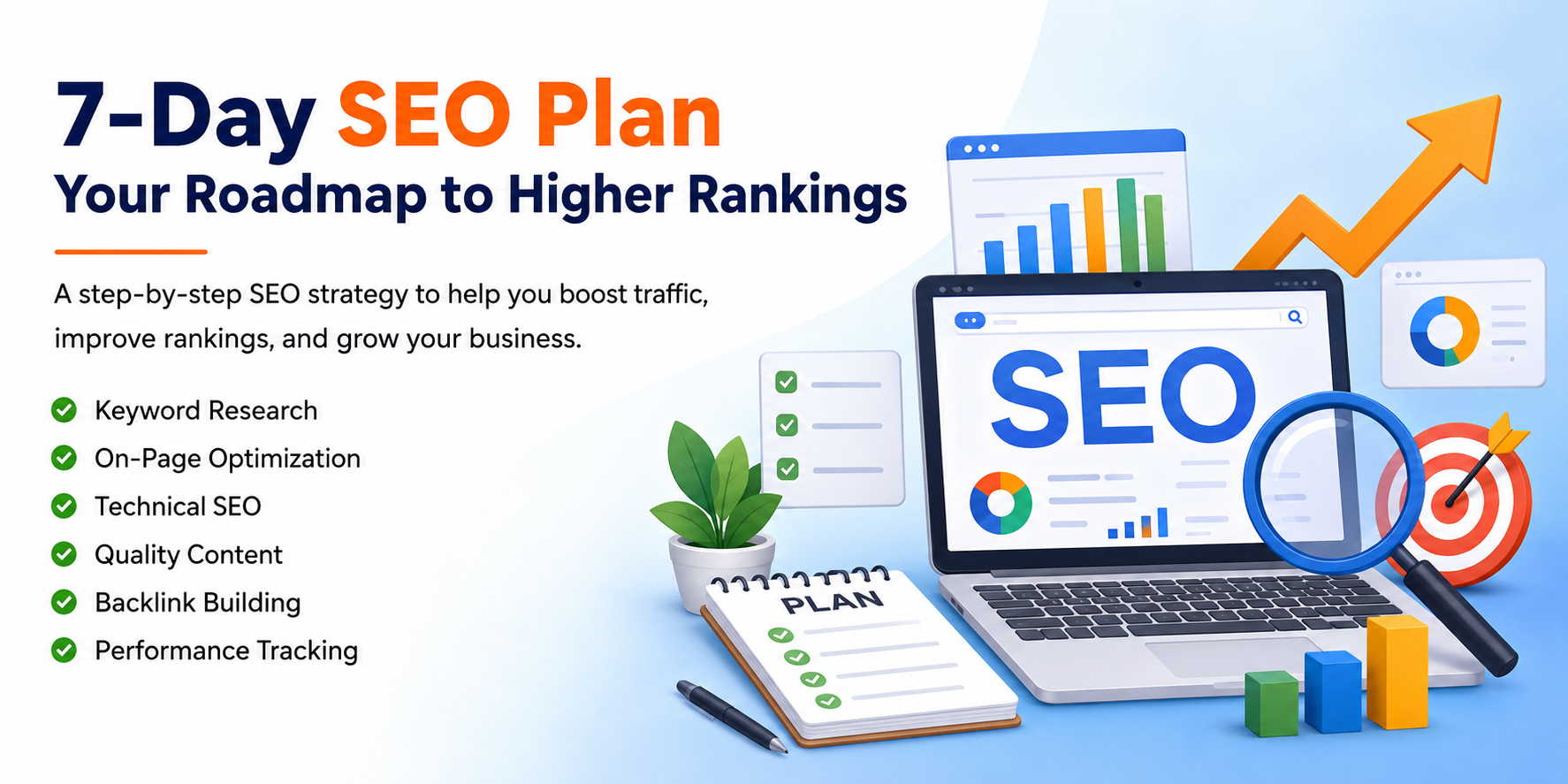
In this guide, we’ll walk through a Day 7 Master SEO Plan—a practical framework that covers everything from keyword research to technical optimization and performance tracking.
Why Do You Need an SEO Plan?
Many websites publish content regularly but fail to generate traffic because they don’t follow a clear SEO strategy.
A structured SEO plan helps you:
- Increase organic website traffic
- Improve keyword rankings
- Build website authority
- Generate quality leads
- Enhance user experience
- Stay ahead of competitors
- Achieve long-term, sustainable growth
Day 1: Define Your SEO Goals
Start by identifying what you want to achieve.
Examples include:
- Increase organic traffic by 40%
- Rank in Google’s Top 10 for target keywords
- Generate more local leads
- Improve website conversions
- Increase blog traffic
- Build brand visibility
Clear goals make it easier to measure success.
Day 2: Perform Keyword Research
Keyword research is the foundation of every successful SEO strategy.
Focus on:
Primary Keywords
High-value keywords related to your products or services.
Example:
- Digital Marketing Course
- SEO Training
- Local SEO Services
Long-Tail Keywords
These are easier to rank for and often have higher conversion rates.
Examples:
- Best SEO Course for Beginners
- Digital Marketing Training with Placement
- SEO Checklist for Small Business
Search Intent
Understand what users actually want.
Different types include:
- Informational
- Commercial
- Transactional
- Navigational
Choose keywords that match user intent rather than simply targeting high search volume.
Day 3: Conduct a Website SEO Audit
Before creating new content, identify existing issues.
Review:
- Broken links
- Duplicate content
- Slow loading pages
- Mobile responsiveness
- Missing meta titles
- Missing meta descriptions
- Image optimization
- Internal linking
- XML sitemap
- Robots.txt
A healthy website provides a better user experience and supports stronger rankings.
Day 4: Optimize On-Page SEO
Every page should be fully optimized.
Optimize:
- SEO Title
- Meta Description
- URL Structure
- H1 Heading
- H2 & H3 Headings
- Keyword Placement
- Internal Links
- External Links
- Image Alt Text
- Schema Markup
Avoid keyword stuffing. Focus on creating content that’s natural, relevant, and easy to read.
Day 5: Create High-Quality Content
Google rewards content that is:
- Helpful
- Original
- Comprehensive
- Well-structured
- Updated regularly
Use:
- FAQs
- Images
- Videos
- Statistics
- Tables
- Checklists
- Examples
Content should answer users’ questions better than competing pages.
Day 6: Improve Technical SEO
Technical SEO ensures search engines can crawl and index your website efficiently.
Key areas include:
Website Speed
Compress images, enable caching, and optimize code to reduce loading times.
Mobile Friendliness
Most users browse on mobile devices, making responsive design essential.
Secure Website
Use HTTPS to protect user data and improve trust.
Crawlability
Ensure important pages are accessible through your XML sitemap and internal links.
Structured Data
Add schema markup to help search engines understand your content and qualify for rich results.
Day 7: Build High-Quality Backlinks
Backlinks remain an important ranking signal when they come from trusted, relevant websites.
Effective ways to earn links include:
- Guest posting
- Digital PR
- Industry partnerships
- Resource pages
- Original research
- Infographics
- Case studies
- High-value blog content
Focus on quality over quantity. A few authoritative backlinks are more valuable than many low-quality ones.
Day 8: Strengthen Internal Linking
Internal links help users navigate your website and allow search engines to discover related content.
Best practices:
- Link to relevant articles naturally
- Use descriptive anchor text
- Connect related service pages and blogs
- Avoid orphan pages with no internal links
Day 9: Optimize for Local SEO
If your business serves a specific location, local SEO is essential.
Make sure you:
- Optimize your Google Business Profile
- Maintain consistent Name, Address, and Phone (NAP) details
- Collect genuine customer reviews
- Create location-specific landing pages
- Add LocalBusiness schema markup
- Build citations on trusted directories
Day 10: Monitor Your SEO Performance
SEO is an ongoing process, so track your progress regularly using tools such as:
- Google Search Console
- Google Analytics 4
- Keyword ranking tools
- Page speed testing tools
Monitor key metrics like:
- Organic traffic
- Keyword rankings
- Click-through rate (CTR)
- Bounce rate
- Conversions
- Indexed pages
- Backlink growth
Review your performance monthly and refine your strategy based on the data.
Common SEO Mistakes to Avoid
Avoid these common pitfalls:
- Targeting irrelevant keywords
- Publishing thin or duplicate content
- Ignoring technical SEO issues
- Neglecting mobile optimization
- Overusing keywords (keyword stuffing)
- Forgetting internal linking
- Buying spammy backlinks
- Not updating old content
- Ignoring search intent
7-Day SEO Action Plan
| Day | Task |
| Day 1 | Set SEO goals and identify target audience |
| Day 2 | Perform keyword research and analyze competitors |
| Day 3 | Conduct a complete website SEO audit |
| Day 4 | Optimize on-page SEO for key pages |
| Day 5 | Publish a high-quality, SEO-friendly blog post |
| Day 6 | Improve technical SEO and website performance |
| Day 7 | Build backlinks, strengthen internal linking, review analytics, and create the plan for the next month |
Final Thoughts
A successful SEO strategy isn’t built in a day—it grows through consistent planning, optimization, and analysis. This Day 7 Master SEO Plan provides a practical roadmap to improve your website’s visibility, attract qualified organic traffic, and build long-term authority in search results.
Remember that SEO is an ongoing process. Regularly update your content, monitor performance, adapt to search engine changes, and focus on creating genuine value for your audience. Over time, these consistent efforts can lead to stronger rankings, increased traffic, and sustainable business growth.