
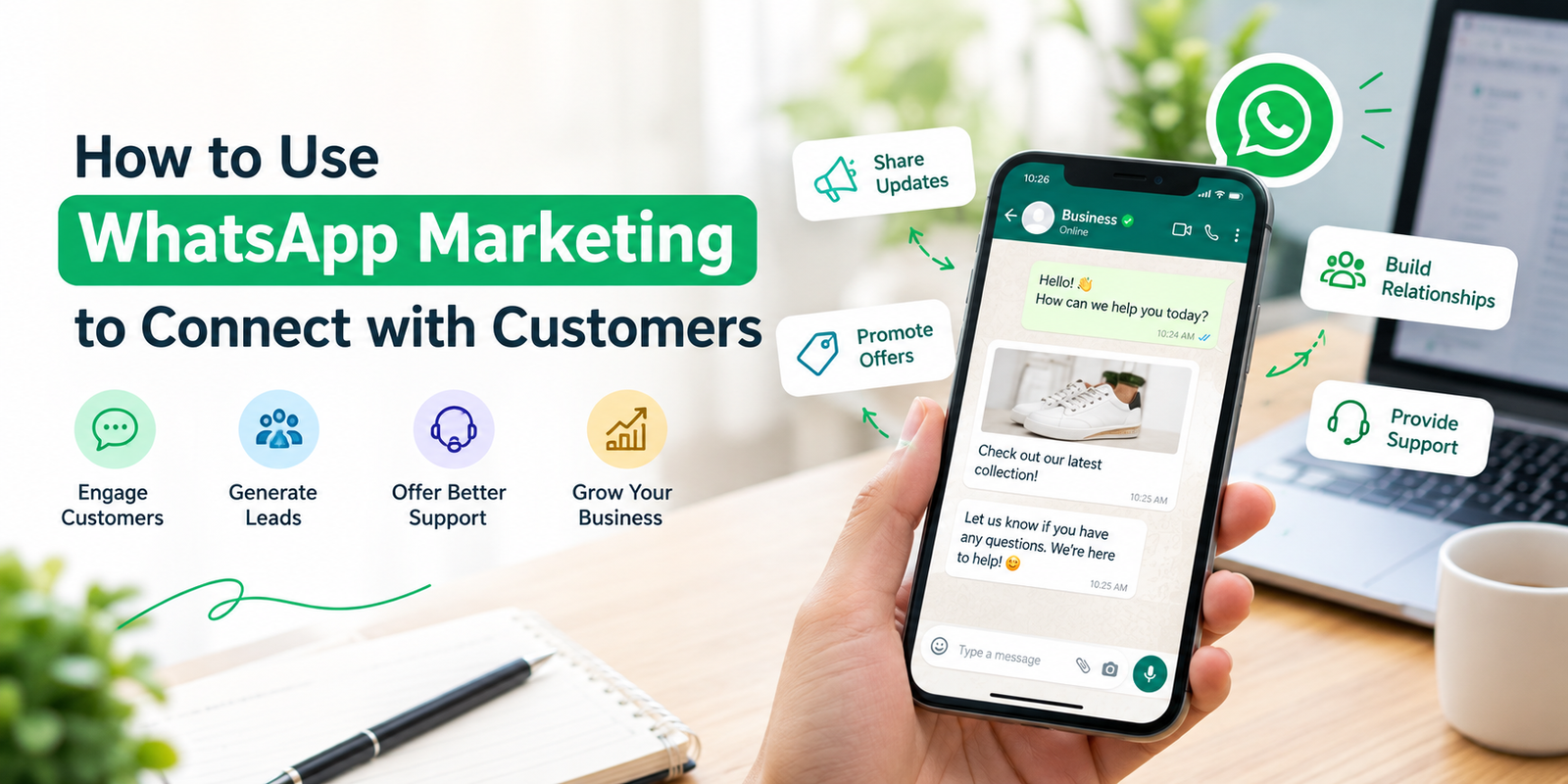
WhatsApp has become an important communication channel for businesses that want to connect with customers quickly and personally. From answering product questions to sharing updates and promoting offers, WhatsApp marketing helps businesses maintain direct communication with their audiences. It can support customer engagement, lead generation, and long-term relationships when used strategically.
For small businesses, startups, and established companies, WhatsApp marketing offers a convenient way to share useful information and respond to customer needs. With the right approach, businesses can use this platform to improve customer experiences and encourage repeat purchases.
What Is WhatsApp Marketing?
WhatsApp marketing is the use of WhatsApp to communicate with customers, share business information, promote products or services, and provide customer support. It allows businesses to send messages, respond to enquiries, share product catalogues, and keep customers informed.
Businesses can use the WhatsApp Business app for everyday customer communication or the WhatsApp Business Platform for more advanced messaging, automation, and integration requirements.
Unlike traditional promotional channels, WhatsApp supports direct, conversational communication. However, businesses should contact people only when they have the appropriate permission and should always respect customer preferences.
Why Is WhatsApp Marketing Important for Businesses?
WhatsApp marketing can help businesses communicate with customers through a familiar messaging platform. Here are some of its key benefits.
1. Direct Communication With Customers
WhatsApp enables businesses to answer questions, provide product details, and communicate important updates directly. Customers can ask questions and receive responses without navigating lengthy contact forms or waiting for email replies.
2. Better Customer Engagement
Businesses can share relevant updates, new product announcements, helpful tips, and special offers with customers who have agreed to receive them. Personalized and useful communication can encourage customers to interact with a brand.
3. Improved Customer Support
Customers often need assistance before or after making a purchase. WhatsApp makes it easier to handle common questions about pricing, availability, bookings, delivery, and services.
Businesses can also use quick replies and automated greetings to manage routine enquiries more efficiently.
4. Opportunities to Generate Leads
WhatsApp can become an effective channel for lead generation. Businesses can invite website visitors, social media followers, or interested prospects to start a conversation and learn more about their products or services.
A clear call to action, such as “Chat with us on WhatsApp,” can make it easier for potential customers to ask questions and move toward a purchase.
5. Stronger Customer Relationships
Regular, relevant communication helps businesses stay connected with existing customers. Sharing useful information, providing timely assistance, and following up appropriately can support customer satisfaction and repeat business.
How to Use WhatsApp Marketing Effectively
A successful WhatsApp marketing strategy requires more than sending promotional messages. Businesses need to understand their audiences, provide value, and communicate responsibly.
1. Set Up a WhatsApp Business Profile
Start by creating a professional WhatsApp Business profile. Add your business name, logo, description, contact details, operating hours, and website link.
If you sell products, use the catalogue feature to display available items with descriptions and prices. A complete profile helps customers understand what your business offers and how they can contact you.
2. Build a Permission-Based Contact List
Before sending marketing messages, obtain clear permission from customers. You can invite people to subscribe through your website, checkout process, enquiry forms, social media pages, or in-store promotions.
Explain what types of messages they can expect. Avoid purchasing contact lists or adding people to promotional campaigns without permission. Make it easy for customers to opt out whenever they wish.
3. Segment Your Audience
Not every customer is interested in the same products or services. Divide your audience into relevant groups based on their interests, previous enquiries, purchase history, or stage in the customer journey, where appropriate.
For example, an online clothing store could send new-arrival updates to interested shoppers and order-related information to existing buyers. Relevant messaging makes communication more useful and less intrusive.
4. Share Valuable and Relevant Content
Your WhatsApp marketing messages should offer value rather than focus entirely on selling. Depending on your business, you could share:
- Product launches and service updates.
- Exclusive offers and seasonal promotions.
- Appointment reminders and booking confirmations.
- Educational tips and helpful guides.
- Order updates and after-sales support.
- Event announcements and registration details.
Keep messages clear, concise, and relevant to the recipient. Use images, videos, or catalogue links when they help explain your offer.
5. Use Automation to Save Time
The WhatsApp Business app offers features such as greeting messages, away messages, and quick replies. These can help businesses respond to common enquiries and communicate outside normal working hours.
Businesses with higher message volumes may consider the WhatsApp Business Platform for approved automation, customer-service workflows, and integrations with compatible systems.
Automation should make conversations more efficient, not prevent customers from getting human assistance when needed.
6. Add WhatsApp to Your Digital Marketing Channels
Integrate WhatsApp into your broader digital marketing strategy. Add a WhatsApp contact option to your website, relevant landing pages, social media profiles, and digital campaigns.
For example, a digital marketing agency could invite visitors to discuss their SEO requirements through WhatsApp. An education institute could use the channel to answer questions about courses, schedules, and admissions.
Make sure the call to action clearly explains what customers can expect after starting a conversation.
7. Measure Your Campaign Performance
Track the results of your WhatsApp marketing efforts to understand what works best. Useful metrics may include:
- Number of enquiries received.
- Responses and customer interactions.
- Leads generated through WhatsApp.
- Purchases or bookings attributed to campaigns.
- Customer opt-outs and negative feedback.
- Response time and customer satisfaction.
Use campaign-specific links, tracking parameters, and your CRM or analytics tools where appropriate. Compare performance over time and improve your messaging based on actual results.
Common WhatsApp Marketing Mistakes to Avoid
Even a well-planned campaign can create a poor customer experience if communication is handled incorrectly. Avoid these common mistakes:
Sending unsolicited messages: Contacting people without appropriate permission can damage trust and lead to complaints.
Sending too many promotions: Excessive messaging can frustrate customers. Choose a reasonable frequency based on customer expectations and campaign performance.
Using generic messages for everyone: Segment your audience and tailor communication to their needs wherever practical.
Ignoring customer replies: Respond to enquiries promptly and provide a clear route to human support when automation cannot resolve an issue.
Failing to track results: Without measurement, it becomes difficult to identify effective campaigns or understand whether WhatsApp is contributing to business goals.
Ignoring WhatsApp policies: Follow applicable WhatsApp Business rules, consent requirements, messaging restrictions, and opt-out requests. Businesses using the platform should review the latest official policies before launching campaigns.
WhatsApp Marketing Examples for Different Businesses
WhatsApp marketing can be adapted to different industries.
E-commerce businesses: Share order confirmations, delivery updates, product information, and opted-in promotional offers.
Educational institutes: Respond to course enquiries, share admission information, and send class reminders or important announcements.
Restaurants and cafés: Provide menus, respond to reservation enquiries, communicate opening hours, and share relevant offers with subscribed customers.
Professional service providers: Schedule appointments, answer service-related questions, and send reminders to clients.
Digital marketing agencies: Qualify enquiries, schedule consultations, share service information, and follow up with interested prospects who have agreed to be contacted.
The most effective approach depends on customer expectations, business objectives, and the type of communication customers have agreed to receive.
Conclusion
WhatsApp marketing gives businesses a practical way to connect with customers, answer questions, share useful updates, and support sales. By setting up a professional business profile, building a permission-based contact list, personalizing messages, using appropriate automation, and tracking campaign performance, businesses can make their communication more effective.
The key is to focus on customer value rather than message volume. When WhatsApp is integrated thoughtfully with a wider digital marketing strategy, it can help businesses build stronger relationships and create better customer experiences.
For businesses and aspiring marketers, learning how WhatsApp fits into digital marketing can also provide useful insights into customer engagement, lead generation, and campaign management.