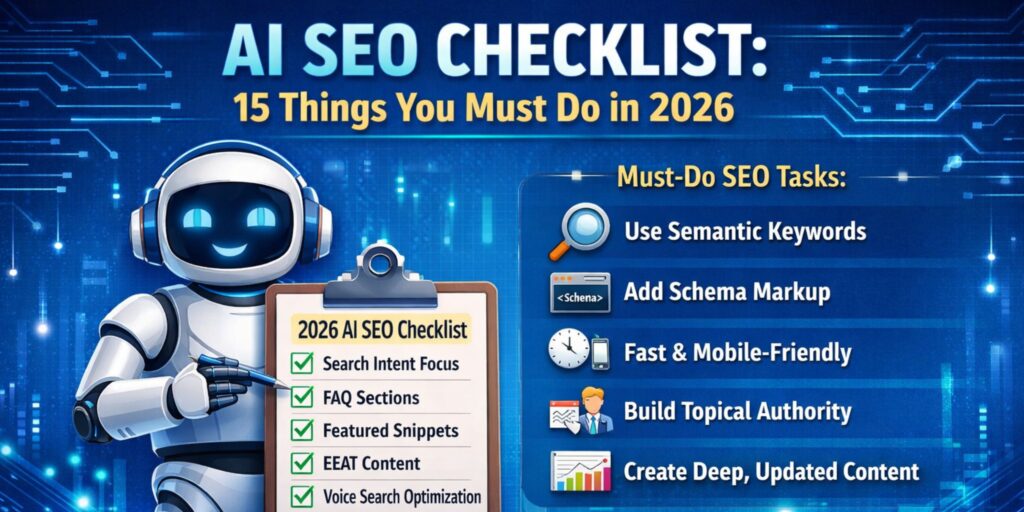
AI SEO Checklist: 15 Things You Must Do in 2026
The world of SEO has changed dramatically. Traditional keyword stuffing and backlink-heavy strategies are no longer enough. With the rise of AI-powered search engines like Google AI Overviews, ChatGPT, and Gemini, the focus has shifted toward context, clarity, and credibility. If you want your website to rank in 2026—not just on Google, but also in AI-generated answers—you need to follow a smarter approach. Here is your complete AI SEO checklist 👇 1. Focus on Search Intent, Not Just Keywords AI understands why users are searching, not just what they type. 👉 Instead of:“Digital marketing course” 👉 Target:“Best digital marketing course for beginners in India with placement” 2. Use Clear, Structured Content AI prefers content that is easy to scan. ✔ Use: 💡 Think: “Can AI easily extract an answer from this?” 3. Add FAQ Sections (VERY IMPORTANT) AI tools love question-answer formats. Example:Q: What is AI SEO?A: AI SEO is the process of optimizing content for AI-powered search engines… 👉 Add 4–6 FAQs in every blog. 4. Optimize for Featured Snippets AI often pulls data from featured snippets. ✔ Use: 5. Build Topical Authority Don’t write random blogs. 👉 Create clusters: Example: 6. Use Semantic Keywords (LSI) AI understands context. 👉 Instead of repeating one keyword:Use related terms: 7. Improve Content Depth (EEAT Rule) Google & AI prioritize: ✔ Add: 8. Optimize for Voice Search AI search = conversational queries. 👉 Use natural language like: 9. Write Simple & Clear Language Avoid complicated words. ✔ Use: 💡 AI prefers clarity over complexity. 10. Add Internal Linking Connect your blogs. Example:👉 Link: 💡 This helps AI understand your website structure. 11. Optimize Page Speed & Mobile UX AI ranking still depends on technical SEO. ✔ Fast loading✔ Mobile-friendly design✔ Clean layout 12. Use Schema Markup Structured data helps AI understand your content. 👉 Use: 13. Keep Content Updated AI prefers fresh information. ✔ Update blogs every 3–6 months✔ Add new data & trends 14. Build Brand Authority AI trusts brands more than unknown websites. ✔ Create: 15. Write for Humans First, AI Second Most important rule. ❌ Don’t write for bots✅ Write for real people 💡 If users love your content, AI will too. Final Thoughts AI SEO in 2026 is not about tricks—it’s about value, clarity, and trust. If you follow this checklist:✔ Your website will rank on Google✔ Your content can appear in AI answers✔ You’ll get more traffic + leads 📌 Bonus Tip Always ask yourself:👉 “Can this content directly answer a user’s question?” If yes, you’re on the right track. 🔥 Want More Leads? If you’re looking to learn or grow your business, explore our Digital Marketing Course in Panchkula and start ranking like a pro.
AI SEO Checklist: 15 Things You Must Do in 2026 Read More »