Sk digital Marketing

digitalorra.developer1

AEO vs SEO Key Differences

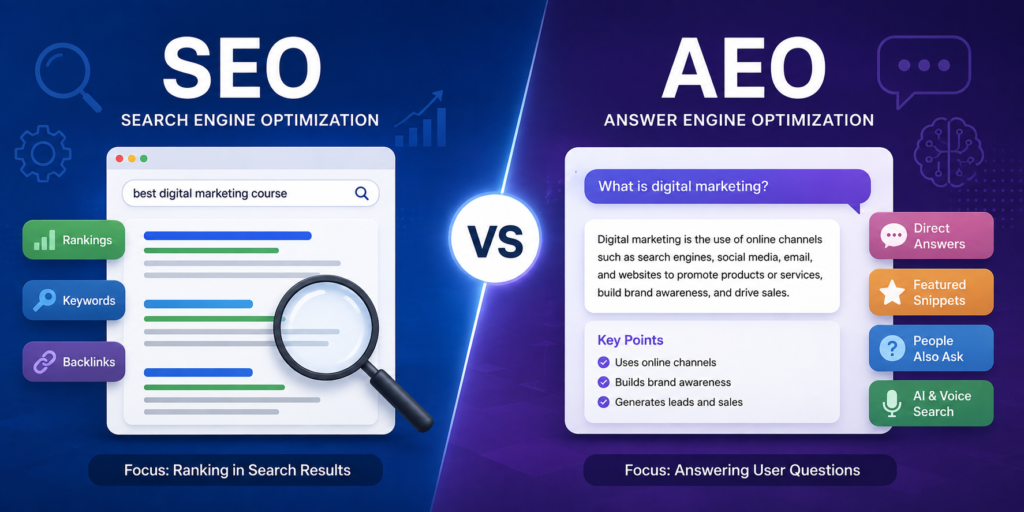
AEO vs SEO: What Is the Difference and Why Does It Matter?

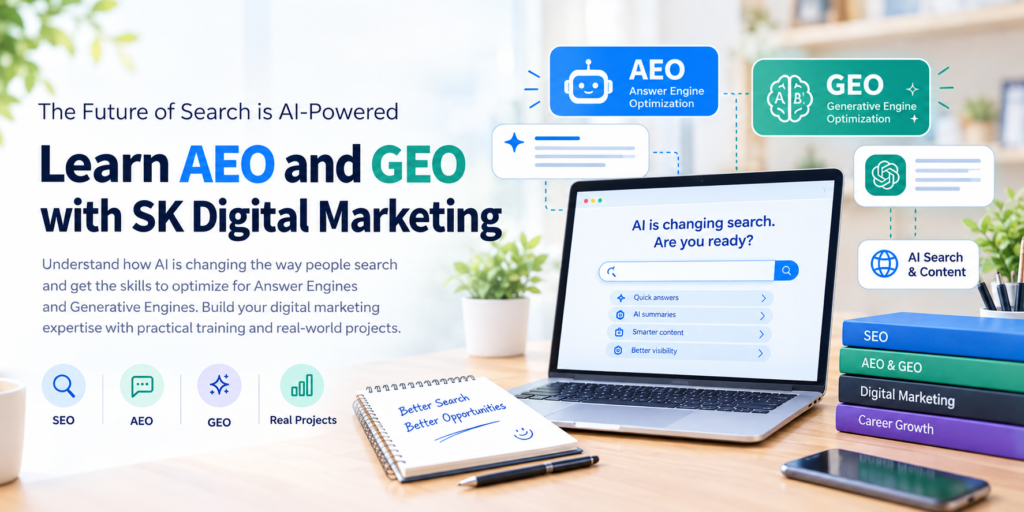
Search is changing rapidly. People are no longer relying only on traditional search results to find information. They are increasingly asking complete questions and expecting direct, conversational answers from search engines and AI-powered search experiences. This shift has made Answer Engine Optimization (AEO) an important topic for digital marketers, alongside traditional Search Engine Optimization (SEO). But what exactly is the difference between AEO and SEO? Is AEO replacing SEO? And how can businesses use both strategies to improve their online visibility? The short answer is: AEO and SEO work best together. Google’s current guidance makes this especially clear: SEO fundamentals remain important for visibility in AI-powered search experiences, including Google’s generative AI features. What Is SEO? Search Engine Optimization (SEO) is the process of improving a website and its content so that search engines can understand, index and potentially rank its pages for relevant searches. Traditional SEO focuses on helping a website appear prominently in search results when users search for specific keywords or topics. Some important areas of SEO include: For example, a digital marketing institute may create a page targeting the keyword “digital marketing course in Panchkula.” SEO helps optimize that page so that search engines can understand its relevance and potentially show it when someone searches for that term. What Is AEO? Answer Engine Optimization (AEO) refers to the practice of structuring and improving content so that it can effectively answer users’ questions in search experiences that provide direct or summarized answers. Instead of focusing only on ranking a webpage for a keyword, AEO emphasizes providing clear, useful and direct answers to specific questions. For example, instead of targeting only: “digital marketing course” an AEO-focused content strategy may address questions such as: This approach aligns with how modern search experiences increasingly handle longer and more conversational queries. It is important to note that AEO is not a separate replacement for Google’s core SEO system. Google currently describes AEO as a term used for work focused on visibility in AI search experiences and states that foundational SEO practices remain relevant. AEO vs SEO: Key Difference The simplest way to understand the difference is: SEO focuses on improving visibility in search results, while AEO focuses more specifically on making content useful and understandable as a direct answer to a user’s question. SEO AEO Focuses on search visibility Focuses on answering questions Often targets keywords and search intent Often targets questions and conversational intent Optimizes webpages for search engines and users Structures information so answers are easy to identify and understand Includes technical, on-page and off-page optimization Emphasizes concise, useful and well-structured answers Helps pages perform in traditional search Can help content become useful for answer-oriented and AI search experiences Covers the overall search strategy Can be considered a more answer-focused layer within a broader search strategy However, these aren’t two completely separate disciplines. A strong AEO strategy still benefits from many SEO fundamentals. Why Does AEO Matter in 2026? The way people search is evolving. Users increasingly ask longer and more specific questions, particularly when using conversational and AI-powered search experiences. Google says its AI search experiences can use information from relevant webpages in its Search index to generate responses and provide links to supporting sources. This creates a new opportunity for businesses. Instead of creating content only around short keywords, businesses can build comprehensive resources that answer the questions their audiences actually have. For example, a traditional keyword strategy might focus on: “SEO course” An expanded answer-focused strategy could cover: This gives users more complete information while helping search systems understand the broader subject covered by the page. How SEO and AEO Work Together Businesses should not think of SEO and AEO as competing strategies. Instead, think of AEO as part of a broader modern search strategy. A strong SEO strategy can help make your website: A strong AEO approach can then make the information on those pages: Google’s official guidance recommends continuing to apply foundational SEO practices when optimizing for its generative AI search features. 7 Ways to Optimize Content for AEO 1. Answer Questions Directly When a user asks a question, don’t make them search through several paragraphs before finding the answer. Start the relevant section with a clear answer and then provide additional explanation. For example: What is SEO? SEO is the process of improving a website so that search engines can better understand its content and potentially show it to users for relevant searches. You can then explain the topic in greater detail. This structure improves readability and makes the main information easier to identify. 2. Understand Search Intent Before creating content, understand what users actually want to know. A keyword can have different types of search intent. For example: “digital marketing course” could indicate that someone wants to: Your content should address the most relevant intent rather than simply repeating the keyword. 3. Use Clear Headings and Subheadings Good content structure is important for both users and search systems. Break long content into logical sections such as: Google recommends organizing content in a way that helps visitors navigate and understand the information on a page. 4. Create Question-Based Content Question-based content can be particularly useful when your audience frequently searches for answers. Examples include: You can identify these questions through keyword research, Search Console data, customer conversations and competitor research. 5. Build Topic Depth Don’t create thin pages that answer only one sentence and provide little additional value. Instead, develop comprehensive content around a topic. For example, an article about “SEO for Small Businesses” could cover: Google’s current guidance emphasizes original, helpful and non-commodity content rather than simply producing large amounts of generic material. 6. Support Claims With Reliable Information Trust matters in search. When discussing statistics, industry trends, technical recommendations or other important claims, use reliable sources and provide accurate information. Google’s guidance emphasizes helpful, reliable, people-first content and encourages website owners to focus on content that provides genuine value. 7. Keep Your Website Technically Strong AEO does not eliminate technical

AEO vs SEO: What Is the Difference and Why Does It Matter? Read More »

How to Become a Professional Video Editor

Become a Professional Video Editor: Skills, Tools & Career Opportunities 

Video content is everywhere—from YouTube and Instagram Reels to corporate advertisements, online courses, films, and OTT platforms. Behind every engaging video is a skilled video editor who transforms raw footage into compelling stories. As businesses and creators continue to invest in video marketing, the demand for professional video editors is growing rapidly. Whether you want to work for a company, become a freelancer, or start your own editing business, video editing offers exciting career opportunities with excellent earning potential. In this guide, you’ll learn everything you need to know about becoming a professional video editor, including the skills you need, the software to learn, career options, salary expectations, and practical tips to succeed. What Does a Professional Video Editor Do? A professional video editor is responsible for turning raw video clips into polished, engaging content. Their work involves much more than simply cutting and joining videos. A video editor typically: Professional editors work on: Why Choose Video Editing as a Career? The digital world is creating endless opportunities for skilled video editors. Every business wants high-quality videos to promote products, educate customers, and build their brand online. Here are some reasons why video editing is one of the best creative careers today. High Demand Companies, influencers, educational institutions, startups, and digital agencies constantly need professional editors. Excellent Freelancing Opportunities Many editors work independently and earn by serving clients worldwide. Flexible Work Environment Video editing is one of the few careers where you can work: Attractive Income Experienced editors can earn significantly more by specializing in commercial editing, YouTube editing, or motion graphics. Creative Satisfaction Every project is different, allowing you to tell stories, experiment with creativity, and continuously improve your skills. Skills You Need to Become a Professional Video Editor Success in video editing requires both technical and creative abilities. Technical Skills Learn how to: Storytelling Great editors know how to keep viewers engaged by arranging clips in the right sequence. Creativity Creativity helps make videos more engaging through music, effects, transitions, pacing, and animations. Attention to Detail Small mistakes like poor audio synchronization or awkward transitions can reduce the quality of your work. Communication Skills Professional editors regularly collaborate with clients, directors, designers, and marketers. Best Video Editing Software to Learn Choosing the right software is the first step toward becoming a successful editor. Adobe Premiere Pro One of the most widely used editing tools in the industry. Best for: DaVinci Resolve Known for its powerful color grading capabilities. Best for: Adobe After Effects Perfect for: Final Cut Pro A popular choice for Mac users. Ideal for: CapCut Excellent for beginners and social media creators. Perfect for: Step-by-Step Guide to Becoming a Professional Video Editor Step 1: Learn the Basics Start by understanding: Spend time learning the interface of professional editing software. Step 2: Practice Every Day The best editors become skilled through consistent practice. Try editing: Practice different editing styles to improve your versatility. Step 3: Master Professional Software Focus on one software initially before learning advanced tools. A recommended learning path is: Step 4: Learn Motion Graphics Motion graphics make your videos stand out. Learn: Step 5: Build a Strong Portfolio Your portfolio matters more than your resume. Include projects like: Host your portfolio on platforms like Behance, Vimeo, YouTube, or a personal website. Step 6: Gain Real-World Experience Work on live projects through: Real experience helps you understand client expectations and deadlines. Step 7: Keep Learning Video editing trends evolve rapidly. Stay updated with: Continuous learning will keep your skills relevant and competitive. How to Build an Impressive Video Editing Portfolio A strong portfolio helps you attract clients and employers. Include: Always showcase your best work instead of uploading every project. Freelancing vs Full-Time Video Editing Freelancing Advantages: Challenges: Full-Time Job Advantages: Challenges: Many professionals begin with a full-time job and later transition to freelancing after gaining experience. Video Editor Salary in India Salaries vary based on skills, experience, location, and specialization. Experience Average Monthly Salary Beginner ₹15,000–₹30,000 1–3 Years ₹30,000–₹60,000 3–5 Years ₹60,000–₹1,00,000 Senior Professional ₹1,00,000+ Freelancers can earn even more by working with international clients, agencies, and content creators. Career Opportunities After Learning Video Editing A professional video editor can work as: Industries hiring video editors include: Common Mistakes Beginners Should Avoid Avoid these mistakes when starting your career: Future Scope of Video Editing The future of video editing is brighter than ever. Businesses are investing heavily in video marketing, online education is expanding, and short-form content continues to dominate platforms like Instagram, YouTube, and LinkedIn. At the same time, AI-powered editing tools are speeding up repetitive tasks, allowing editors to focus more on creativity and storytelling. Professionals who combine editing expertise with motion graphics, AI tools, and digital marketing knowledge will have a competitive advantage. As the demand for engaging visual content grows, skilled video editors will continue to enjoy excellent career opportunities across industries. How a Professional Video Editing Course Can Help While you can learn through online tutorials, a structured course can accelerate your learning by providing: If you’re serious about building a career, enrolling in a practical, industry-focused training program can help you become job-ready faster. Conclusion Video editing is more than just a technical skill—it’s a creative profession that combines storytelling, design, and technology. With the growing demand for video content across businesses, entertainment, education, and social media, becoming a professional video editor is an excellent career choice in 2026 and beyond. Start by learning the fundamentals, master industry-standard software, practice consistently, and build a portfolio that showcases your creativity. Whether you aim to work for a company, freelance, or launch your own editing business, dedication and continuous learning will help you succeed. If you’re ready to turn your creativity into a rewarding profession, now is the perfect time to begin your journey toward becoming a professional video editor.

Become a Professional Video Editor: Skills, Tools & Career Opportunities  Read More »

100 Plus ChatGPT Prompts for Digital Marketing

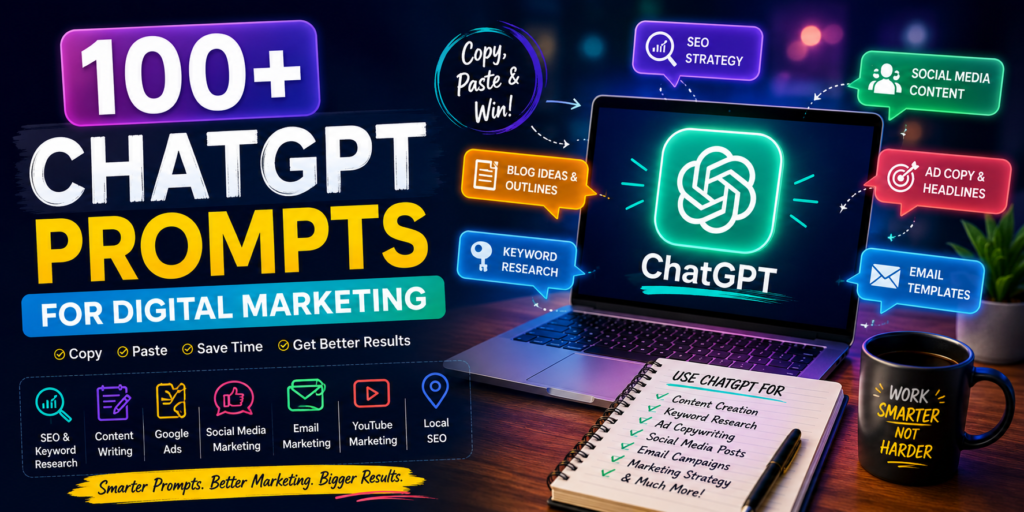
100+ ChatGPT Prompts for Digital Marketing (Copy & Paste Guide)

Artificial Intelligence has become an essential part of digital marketing, and ChatGPT is one of the most powerful AI tools available today. Whether you’re an SEO professional, content writer, social media manager, PPC expert, freelancer, or business owner, ChatGPT can help you complete marketing tasks faster and more efficiently. The key to getting excellent results lies in writing the right prompts. A well-crafted prompt provides ChatGPT with clear instructions, enabling it to generate accurate, creative, and actionable responses. In this guide, you’ll discover 100+ ChatGPT prompts for digital marketing, categorized by SEO, content writing, Google Ads, social media, email marketing, keyword research, YouTube, and Local SEO. Simply copy, customize, and use them to save time and improve your marketing campaigns. What Are ChatGPT Prompts? A ChatGPT prompt is the instruction you provide to ChatGPT. The more detailed your prompt, the better the response. Example ❌ Basic Prompt: Write a blog on SEO. ✅ Better Prompt: Act as an SEO expert and write a 1,500-word beginner-friendly blog on “On-Page SEO Checklist.” Include headings, FAQs, examples, and a conclusion with a call to action. This simple improvement can significantly enhance the quality of the output. Why Digital Marketers Should Use ChatGPT ChatGPT helps marketers: How to Write Better AI Prompts For the best results, always include: A detailed prompt always delivers better responses than a vague one. 20 SEO Prompts Use these prompts to improve your search engine optimization workflow. 20 Content Writing Prompts 15 Google Ads Prompts 15 Social Media Marketing Prompts 10 Email Marketing Prompts 10 Keyword Research Prompts 10 YouTube Marketing Prompts 10 Local SEO Prompts Bonus Power Prompts These advanced prompts can help you complete larger marketing projects: Frequently Asked Questions Are ChatGPT prompts free to use? Yes. You can create and customize prompts for your business needs. Can ChatGPT replace digital marketers? No. ChatGPT enhances productivity but still requires human expertise, creativity, and strategic thinking. Which prompts are most useful for SEO? Keyword research, content optimization, meta tag creation, content planning, and FAQ generation are among the most valuable. Can beginners use ChatGPT for digital marketing? Absolutely. ChatGPT simplifies complex marketing tasks and helps beginners learn faster. How often should I update my prompts? Review and refine your prompts regularly to align with new AI capabilities, search trends, and marketing goals. Final Thoughts ChatGPT is transforming the way digital marketers work. From generating blog ideas and SEO strategies to writing Google Ads, social media posts, and email campaigns, the right prompts can save hours of manual effort while improving content quality. Instead of starting every task from scratch, build your own prompt library and refine it over time. The more specific your prompts, the more valuable the responses you’ll receive. By using the 100+ prompts shared in this guide, you can streamline your workflow, boost productivity, and focus on what matters most—creating successful digital marketing campaigns that drive real results.

100+ ChatGPT Prompts for Digital Marketing (Copy & Paste Guide) Read More »

Day 7 Master SEO Plan

Day 7 Master SEO Plan: Build an SEO Strategy That Delivers Long-Term Results

SEO isn’t about finding shortcuts or ranking overnight. It’s about following a structured process that helps search engines understand your website while providing value to users. Whether you’re a beginner learning SEO or a business owner trying to increase organic traffic, having a well-defined SEO plan is essential. Without one, it’s easy to waste time on activities that don’t contribute to better rankings. In this guide, we’ll walk through a Day 7 Master SEO Plan—a practical framework that covers everything from keyword research to technical optimization and performance tracking. Why Do You Need an SEO Plan? Many websites publish content regularly but fail to generate traffic because they don’t follow a clear SEO strategy. A structured SEO plan helps you: Day 1: Define Your SEO Goals Start by identifying what you want to achieve. Examples include: Clear goals make it easier to measure success. Day 2: Perform Keyword Research Keyword research is the foundation of every successful SEO strategy. Focus on: Primary Keywords High-value keywords related to your products or services. Example: Long-Tail Keywords These are easier to rank for and often have higher conversion rates. Examples: Search Intent Understand what users actually want. Different types include: Choose keywords that match user intent rather than simply targeting high search volume. Day 3: Conduct a Website SEO Audit Before creating new content, identify existing issues. Review: A healthy website provides a better user experience and supports stronger rankings. Day 4: Optimize On-Page SEO Every page should be fully optimized. Optimize: Avoid keyword stuffing. Focus on creating content that’s natural, relevant, and easy to read. Day 5: Create High-Quality Content Google rewards content that is: Use: Content should answer users’ questions better than competing pages. Day 6: Improve Technical SEO Technical SEO ensures search engines can crawl and index your website efficiently. Key areas include: Website Speed Compress images, enable caching, and optimize code to reduce loading times. Mobile Friendliness Most users browse on mobile devices, making responsive design essential. Secure Website Use HTTPS to protect user data and improve trust. Crawlability Ensure important pages are accessible through your XML sitemap and internal links. Structured Data Add schema markup to help search engines understand your content and qualify for rich results. Day 7: Build High-Quality Backlinks Backlinks remain an important ranking signal when they come from trusted, relevant websites. Effective ways to earn links include: Focus on quality over quantity. A few authoritative backlinks are more valuable than many low-quality ones. Day 8: Strengthen Internal Linking Internal links help users navigate your website and allow search engines to discover related content. Best practices: Day 9: Optimize for Local SEO If your business serves a specific location, local SEO is essential. Make sure you: Day 10: Monitor Your SEO Performance SEO is an ongoing process, so track your progress regularly using tools such as: Monitor key metrics like: Review your performance monthly and refine your strategy based on the data. Common SEO Mistakes to Avoid Avoid these common pitfalls: 7-Day SEO Action Plan Day Task Day 1 Set SEO goals and identify target audience Day 2 Perform keyword research and analyze competitors Day 3 Conduct a complete website SEO audit Day 4 Optimize on-page SEO for key pages Day 5 Publish a high-quality, SEO-friendly blog post Day 6 Improve technical SEO and website performance Day 7 Build backlinks, strengthen internal linking, review analytics, and create the plan for the next month Final Thoughts A successful SEO strategy isn’t built in a day—it grows through consistent planning, optimization, and analysis. This Day 7 Master SEO Plan provides a practical roadmap to improve your website’s visibility, attract qualified organic traffic, and build long-term authority in search results. Remember that SEO is an ongoing process. Regularly update your content, monitor performance, adapt to search engine changes, and focus on creating genuine value for your audience. Over time, these consistent efforts can lead to stronger rankings, increased traffic, and sustainable business growth.

Day 7 Master SEO Plan: Build an SEO Strategy That Delivers Long-Term Results Read More »

Digital Marketing Course vs MBA Marketing

Digital Marketing Course vs MBA Marketing: Which is Better?

Choosing the right career path after graduation can be challenging, especially when deciding between a Digital Marketing Course and an MBA in Marketing. Both options offer excellent career opportunities, but they cater to different career goals, budgets, and learning preferences. With businesses rapidly shifting towards digital platforms, the demand for skilled digital marketers has increased significantly. At the same time, an MBA in Marketing remains one of the most respected postgraduate degrees for management and leadership roles. So, which one should you choose? Let’s compare both options in detail. What is a Digital Marketing Course? A Digital Marketing Course is a skill-based training program that teaches students how to promote businesses online. It focuses on practical knowledge and real-world applications rather than traditional classroom theories. Most professional digital marketing courses include modules such as: These courses are designed to make students job-ready within a few months. What is an MBA in Marketing? An MBA in Marketing is a postgraduate degree that focuses on business management, leadership, marketing strategy, finance, operations, and organizational management. Apart from marketing, students also learn subjects like: MBA programs usually take two years to complete. Digital Marketing Course vs MBA Marketing Feature Digital Marketing Course MBA Marketing Duration 3–12 Months 2 Years Fees Affordable High Learning Style Practical Theory + Practical Industry Demand Very High High Placement Time Quick Longer Focus Digital Skills Business Management Best For Job Seekers, Freelancers, Entrepreneurs Corporate Management Roles Course Duration One of the biggest differences is the time required. A Digital Marketing Course can usually be completed within 3 to 6 months, while advanced programs may take up to one year. An MBA in Marketing generally requires two years of full-time study. If you want to start earning quickly, a digital marketing course offers a faster route. Course Fees The investment required is also very different. A Digital Marketing Course is much more affordable and provides excellent value through hands-on training. On the other hand, an MBA in Marketing can involve significantly higher tuition fees, along with additional expenses such as accommodation, books, and living costs. Students looking for a budget-friendly option often prefer digital marketing. Practical Learning Today’s employers value practical skills. Most Digital Marketing Courses provide: MBA programs emphasize business concepts, case studies, and strategic thinking, with comparatively less hands-on digital execution. Career Opportunities After a Digital Marketing Course You can work as: After an MBA in Marketing Career options include: Salary Comparison Salary depends on skills, experience, and company size. Freshers with practical digital marketing skills often find opportunities quickly and can increase their earnings by specializing in areas such as SEO, paid advertising, or performance marketing. MBA graduates may start with competitive salaries, particularly from reputed institutions, and often move into managerial roles as they gain experience. Ultimately, continuous learning and real-world performance have a greater impact on long-term income than the qualification alone. Demand in 2026 Businesses are investing heavily in online marketing. Almost every company today needs professionals who understand: This growing demand has created thousands of job opportunities for digital marketers. MBA graduates continue to be in demand, particularly for management and leadership positions, but organizations increasingly value candidates who also possess strong digital marketing skills. Which Course is Better for Entrepreneurs? If you want to: A Digital Marketing Course offers practical skills that can be applied immediately. An MBA helps in understanding broader business management concepts, making it useful for scaling larger organizations. Can You Do Both? Absolutely. Many professionals first complete a Digital Marketing Course to gain practical industry skills and later pursue an MBA to strengthen their business and leadership knowledge. This combination can provide a competitive advantage by blending technical expertise with strategic management. Who Should Choose a Digital Marketing Course? A Digital Marketing Course is ideal for: If your goal is to become job-ready in a shorter time and develop practical, in-demand skills, this path is a strong choice. Who Should Choose an MBA in Marketing? An MBA in Marketing is better suited for those who: Final Verdict There is no universal answer to whether a Digital Marketing Course or an MBA in Marketing is better—it depends on your career goals. If you want practical skills, faster job opportunities, lower costs, and the flexibility to work as a freelancer, entrepreneur, or digital marketing professional, a Digital Marketing Course is an excellent option. If your long-term goal is to build a career in business management, corporate leadership, and strategic marketing, an MBA in Marketing remains a valuable qualification. For many aspiring professionals, combining practical digital marketing expertise with business knowledge can create the strongest career foundation in today’s digital economy. FAQs Is a Digital Marketing Course better than an MBA? It depends on your goals. A Digital Marketing Course focuses on practical, job-ready skills, while an MBA emphasizes business management and leadership. Can I get a good job after a Digital Marketing Course? Yes. Skilled digital marketers are in demand across industries, including agencies, startups, e-commerce companies, and corporate organizations. Which course has better career growth? Both offer strong growth opportunities. Digital marketing provides faster entry into the workforce, while an MBA can open doors to senior management roles over time. Can I pursue a Digital Marketing Course after completing an MBA? Yes. Many MBA graduates take digital marketing courses to gain specialized skills and stay competitive in the evolving marketing landscape. Which option is more affordable? A Digital Marketing Course is generally more affordable and can be completed in a much shorter duration than an MBA in Marketing.

Digital Marketing Course vs MBA Marketing: Which is Better? Read More »

Digital Marketing Internship at SK Institute

How to Get a Digital Marketing Internship at SK Institute

The digital marketing industry is growing rapidly, creating exciting career opportunities for students and freshers. However, many aspiring marketers face one common challenge: gaining practical experience before applying for jobs. This is where a digital marketing internship becomes valuable. An internship allows you to work on real projects, understand industry practices, and build the skills employers are looking for. At SK Institute, students not only learn digital marketing concepts but also gain hands-on exposure through practical training, live projects, and internship opportunities. The institute focuses on preparing students for real-world marketing challenges by providing industry-oriented learning and career support. Why Is a Digital Marketing Internship Important? A digital marketing internship helps you: Many companies today prefer candidates who have practical experience working on campaigns and projects rather than only theoretical knowledge. Step 1: Enroll in a Practical Digital Marketing Course The first step toward securing an internship is learning the fundamentals of digital marketing. At SK Institute, students receive practical training in various modules including: The institute emphasizes live projects and hands-on learning to ensure students develop job-ready skills. Step 2: Master the Core Digital Marketing Skills Before applying for an internship, focus on developing essential skills such as: SEO Skills Learn keyword research, on-page SEO, off-page SEO, technical SEO, and website audits. Social Media Marketing Understand how to create engaging content and manage campaigns across platforms like Facebook, Instagram, LinkedIn, and YouTube. Paid Advertising Gain knowledge of Google Ads and Meta Ads to generate leads and increase brand visibility. Content Creation Develop content writing skills for blogs, websites, and social media marketing campaigns. Analytics Learn how to track website performance using tools such as Google Analytics and Search Console. Step 3: Work on Live Projects One of the biggest advantages of studying at SK Institute is the opportunity to work on live projects. Real project experience helps you: Employers often prioritize candidates who can demonstrate real-world experience rather than simply listing certifications.  Step 4: Build a Strong Portfolio A portfolio is one of the most powerful tools when applying for internships. Include: Your portfolio should showcase what you have learned and how you have applied those skills in practical situations. Step 5: Create a Professional Resume Your resume should highlight: Keep the resume concise and focused on relevant marketing skills. Step 6: Participate in Internship Programs Offered by SK Institute SK Institute offers internship and placement assistance as part of its advanced training programs. Students receive guidance on interview preparation, resume building, and career development to improve their chances of securing internships and job opportunities. Step 7: Prepare for Internship Interviews Common interview topics include: Practice answering these questions confidently and support your answers with examples from your live projects. Benefits of Doing an Internship Through SK Institute Students who complete internships through SK Institute can gain: The institute’s focus on practical learning and project-based training helps bridge the gap between education and employment.  Final Thoughts A digital marketing internship is the ideal way to transform your learning into real-world experience. By mastering essential skills, working on live projects, building a strong portfolio, and taking advantage of internship opportunities offered by SK Institute, you can significantly improve your chances of launching a successful career in digital marketing. Whether you are a student, graduate, entrepreneur, or career changer, the right internship can be the first step toward becoming a successful digital marketing professional. SK Institute’s practical training approach, live projects, and placement support can help you gain the experience and confidence needed to succeed in today’s competitive digital landscape. 

How to Get a Digital Marketing Internship at SK Institute Read More »

What Happens After You Search on Google

What Happens After You Search Something on Google?

Have you ever wondered what actually happens when you type something into Google and hit “search”? It feels instant — you type a query, press enter, and within seconds, millions of results appear. But behind that simple action, there’s a powerful and complex process working in real time. Let’s break it down in the simplest way possible 👇 Step 1: Your Query Travels to Google’s Servers The moment you hit “search,” your request is sent from your device to Google’s servers. Google has data centers all over the world, so your query is directed to the nearest and fastest server. This is why results load almost instantly. Step 2: Google Checks Its Index (Not the Internet!) Here’s something surprising: 👉 Google does NOT search the entire internet every time you search. Instead, it looks into something called an index — a massive database where Google has already stored information about billions of web pages. Think of it like:📖 A library catalog instead of searching every book one by one. Step 3: How Did Google Get That Data? Before your search even happens, Google uses bots (called crawlers or spiders) to scan websites across the internet. These bots: This process is called crawling and indexing. Step 4: Google Ranks the Results Now comes the most important part 👇 Once Google finds relevant pages, it ranks them using its algorithm. Google considers hundreds of factors, such as: This is why some websites appear on the first page, while others don’t. Step 5: Results Are Personalized (Sometimes) Google may also adjust results based on: For example:Searching “best cafe” in Delhi vs Mumbai will show different results. Step 6: Results Appear in Seconds Finally, Google shows you: All of this happens in less than a second 🤯 Why This Matters for You Understanding this process helps you realize: Final Thoughts The next time you search something on Google, remember: 👉 You’re not searching the internet👉 You’re searching Google’s organized system of the internet And the better your content is optimized, the higher your chances of being found. Bonus Thought If you’re curious about how websites actually rank and how this whole system works in practice, learning the basics of SEO and digital marketing can give you a big advantage in today’s online world.

What Happens After You Search Something on Google? Read More »

AI SEO Checklist

AI SEO Checklist: 15 Things You Must Do in 2026

The world of SEO has changed dramatically. Traditional keyword stuffing and backlink-heavy strategies are no longer enough. With the rise of AI-powered search engines like Google AI Overviews, ChatGPT, and Gemini, the focus has shifted toward context, clarity, and credibility. If you want your website to rank in 2026—not just on Google, but also in AI-generated answers—you need to follow a smarter approach. Here is your complete AI SEO checklist 👇 1. Focus on Search Intent, Not Just Keywords AI understands why users are searching, not just what they type. 👉 Instead of:“Digital marketing course” 👉 Target:“Best digital marketing course for beginners in India with placement” 2. Use Clear, Structured Content AI prefers content that is easy to scan. ✔ Use: 💡 Think: “Can AI easily extract an answer from this?” 3. Add FAQ Sections (VERY IMPORTANT) AI tools love question-answer formats. Example:Q: What is AI SEO?A: AI SEO is the process of optimizing content for AI-powered search engines… 👉 Add 4–6 FAQs in every blog. 4. Optimize for Featured Snippets AI often pulls data from featured snippets. ✔ Use: 5. Build Topical Authority Don’t write random blogs. 👉 Create clusters: Example: 6. Use Semantic Keywords (LSI) AI understands context. 👉 Instead of repeating one keyword:Use related terms: 7. Improve Content Depth (EEAT Rule) Google & AI prioritize: ✔ Add: 8. Optimize for Voice Search AI search = conversational queries. 👉 Use natural language like: 9. Write Simple & Clear Language Avoid complicated words. ✔ Use: 💡 AI prefers clarity over complexity. 10. Add Internal Linking Connect your blogs. Example:👉 Link: 💡 This helps AI understand your website structure. 11. Optimize Page Speed & Mobile UX AI ranking still depends on technical SEO. ✔ Fast loading✔ Mobile-friendly design✔ Clean layout 12. Use Schema Markup Structured data helps AI understand your content. 👉 Use: 13. Keep Content Updated AI prefers fresh information. ✔ Update blogs every 3–6 months✔ Add new data & trends 14. Build Brand Authority AI trusts brands more than unknown websites. ✔ Create: 15. Write for Humans First, AI Second Most important rule. ❌ Don’t write for bots✅ Write for real people 💡 If users love your content, AI will too. Final Thoughts AI SEO in 2026 is not about tricks—it’s about value, clarity, and trust. If you follow this checklist:✔ Your website will rank on Google✔ Your content can appear in AI answers✔ You’ll get more traffic + leads 📌 Bonus Tip Always ask yourself:👉 “Can this content directly answer a user’s question?” If yes, you’re on the right track. 🔥 Want More Leads? If you’re looking to learn or grow your business, explore our Digital Marketing Course in Panchkula and start ranking like a pro.

AI SEO Checklist: 15 Things You Must Do in 2026 Read More »

Digital Marketing vs MBA in Marketing

Digital Marketing Course vs MBA in Marketing – Which is Better for Your Career in 2026?

Choosing the right career path after 12th or graduation is one of the most important decisions in life. In today’s fast-changing digital world, two popular options stand out — Digital Marketing Course and MBA in Marketing. But the real question is: Which one is better for your career in 2026? In this detailed guide, we will compare both options based on fees, duration, salary, job opportunities, and future scope so you can make the right decision. What is a Digital Marketing Course? A Digital Marketing Course is a short-term, skill-based program that teaches you how to promote businesses online using modern tools and strategies. Key Modules Covered: Best For: Why It’s Popular in 2026: What is an MBA in Marketing? An MBA in Marketing is a postgraduate degree program focused on marketing strategies, business management, and leadership. What You Learn: Best For: Advantages: Limitations: Career Opportunities Comparison After Digital Marketing Course: Starting Salary: ₹15,000 – ₹40,000/monthFreelancing Potential: ₹50,000+ After MBA in Marketing: Starting Salary: ₹30,000 – ₹1L+/month Which One Should You Choose? Choose Digital Marketing Course if: ✔ You want quick job or income ✔ You prefer practical skills over theory ✔ You want to start freelancing or business ✔ You have a low budget Choose MBA in Marketing if: ✔ You want a corporate career ✔ You aim for managerial positions ✔ You can invest 2 years + high fees ✔ You want a recognized degree Best Option (Smart Strategy) 👉 Many students today are choosing a hybrid approach: ✔ Do a Digital Marketing Course first (start earning early)✔ Then pursue MBA later for career growth This way you get: Final Verdict CTA (For Your Website) If you are looking for a practical Digital Marketing Course in Panchkula, SK Digital Marketing offers: ✔ 100% Practical Training✔ Live Projects✔ Placement Assistance✔ Freelancing Guidance 👉 Book Your Free Demo Class Today!

Digital Marketing Course vs MBA in Marketing – Which is Better for Your Career in 2026? Read More »

Get Your First Client in Digital Marketing

How to Get Your First Client in Digital Marketing (Step-by-Step Guide)

Getting your first client in digital marketing is the biggest milestone for any beginner. Whether you’ve completed a course or learned skills online, landing that first client builds confidence and opens doors to consistent income. If you’re struggling to get started, this guide will walk you through practical, proven steps to secure your first digital marketing client. 1. Choose a Specific Service (Don’t Be Everything) Many beginners make the mistake of offering everything — SEO, social media, ads, content, etc. 👉 Instead, start with one focused service, such as: 💡 Example: “I help local businesses rank on Google using SEO.” This makes you look like an expert rather than a beginner. 2. Build a Simple Portfolio (Even Without Clients) No experience? No problem. Create demo work to showcase your skills: 👉 You can even use your own website like skdigitalmarketing.in as proof. 💡 Tip: Show before-after results wherever possible. 3. Start with Local Businesses (Easiest Clients) Your first client is often near you. Target: 👉 Search: “businesses near me with poor online presence” Approach them with a simple message: “Hi, I noticed your business is not ranking on Google. I can help you get more customers.” 4. Use Social Media for Outreach Social media is a goldmine for clients. Platforms to use: 👉 What to do: 💡 Consistency builds trust and visibility. 5. Create Profiles on Freelancing Platforms Sign up on: 👉 Tips to get your first order: 6. Offer Free or Low-Cost Trial This is one of the fastest ways to get your first client. 👉 Example offers: 💡 Once they see results, they will convert into paying clients. 7. Build Trust with Content Clients don’t buy services — they buy trust. Start creating content like: 👉 This positions you as an expert. 8. Ask for Referrals After your first project: 💡 One happy client can bring 2–3 more clients. 9. Improve Your Communication Skills Many deals are lost due to poor communication. 👉 Always: 10. Be Patient & Consistent Getting your first client may take: 👉 But consistency always wins. Conclusion Getting your first client in digital marketing is not about luck — it’s about strategy, persistence, and smart positioning. Start small, focus on delivering value, and keep improving your skills. Once you get your first client, the journey becomes much easier. Want to Learn Digital Marketing & Start Earning? If you’re serious about building a career in digital marketing, join our Digital Marketing Course in Panchkula at SK Digital Marketing. 👉 Learn SEO, Social Media, Ads & Freelancing👉 Get practical training + real projects👉 Start earning from home

How to Get Your First Client in Digital Marketing (Step-by-Step Guide) Read More »